What to Do If You Send Cryptocurrency to the Wrong Network: Real Recovery Options in 2026
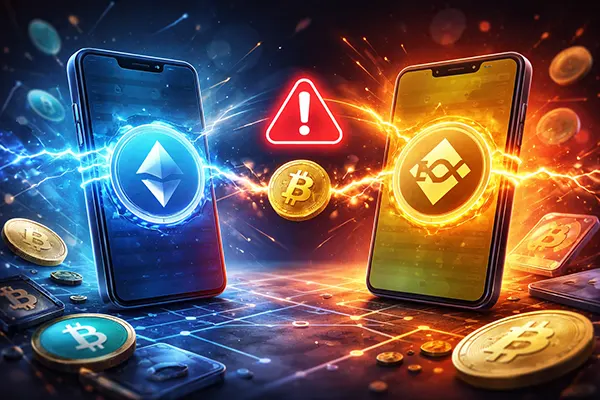
Sending cryptocurrency to the wrong blockchain network remains one of the most common and stressful user mistakes in 2026. Despite improved wallet interfaces and clearer exchange warnings, thousands of transactions each year are still misrouted between incompatible networks such as Ethereum (ERC-20), BNB Smart Chain (BEP-20), Polygon, Arbitrum or Tron. The outcome depends entirely on the technical details of the transaction: which networks were involved, who controls the receiving address, and whether the private keys are accessible. This guide explains what actually happens in these situations and outlines the realistic recovery paths available today.
Why Sending to the Wrong Network Happens and What It Technically Means
Most modern tokens exist on multiple blockchains. For example, USDT and USDC are available on Ethereum, Tron, BNB Smart Chain, Polygon, Avalanche and several Layer 2 networks. The wallet address may look similar across networks, but the underlying blockchain infrastructure is completely different. When a user selects the wrong withdrawal network on an exchange, the tokens are broadcast to a blockchain that the recipient may not be monitoring.
Technically, the funds are not “lost” in the abstract. They are recorded on the blockchain where they were sent. The problem arises when the receiving service or wallet does not support that specific network. If the recipient does not have access to the private keys or does not operate nodes for that chain, they cannot see or retrieve the tokens through their usual interface.
In 2026, many exchanges support multi-network deposits, but not all combinations are accepted. For example, sending ERC-20 USDT to a deposit address that only supports TRC-20 will result in the tokens being credited on Ethereum, not Tron. Whether they can be recovered depends entirely on who controls the receiving wallet and whether they are willing and able to perform manual extraction.
Understanding Address Compatibility and Private Key Control
If you control the private key or seed phrase of the destination address, recovery is often technically possible. Many blockchains use the same address format, particularly Ethereum Virtual Machine (EVM) compatible chains such as Ethereum, BNB Smart Chain, Polygon and Arbitrum. In these cases, the same private key can control assets across multiple networks.
For example, if you sent BEP-20 tokens to an Ethereum address that you personally own via MetaMask, you can simply add the correct network to your wallet and import the token contract manually. The funds are already there; they just need to be viewed on the correct chain.
However, if the address belongs to a centralised exchange and you do not control the private key, recovery depends entirely on the exchange’s internal policy. Some platforms offer paid recovery services in 2026, typically charging between £50 and several hundred pounds depending on the complexity and token type. Others explicitly state that unsupported network deposits are unrecoverable.
Immediate Steps to Take After Discovering the Error
Time does not reverse blockchain transactions, but acting quickly can improve your chances. First, identify exactly which network the funds were sent on. Use a blockchain explorer such as Etherscan, BscScan or Tronscan to confirm the transaction hash and verify that the transfer was successful on that chain.
Second, determine who controls the receiving address. If it is your own self-custody wallet, check whether the network is simply not enabled. Add the appropriate blockchain network in your wallet settings and manually add the token contract address if necessary. In many cases, the funds will appear immediately once the correct configuration is in place.
If the address belongs to an exchange or custodial service, contact their support team with the transaction hash, token name, network and amount. Provide complete information from the start. In 2026, some large exchanges such as Binance and Coinbase offer structured recovery procedures for certain EVM-compatible mis-sends, although there is no guarantee of success.
When Exchanges Can and Cannot Help
Exchanges can only assist if they control the private keys of the deposit address and technically support the blockchain where the funds were sent. If they do not operate infrastructure for that network, recovery may require complex internal processes that they may decline to perform.
In EVM-to-EVM mistakes, recovery is more realistic because the same private key structure applies. In non-compatible cases, such as sending Bitcoin to an Ethereum address or vice versa, recovery is almost always impossible unless the receiving party controls both chains’ private keys in a compatible format, which is rare.
It is important to understand that support teams cannot “reverse” blockchain transactions. They can only access tokens if they technically exist under keys they control. If a platform states that the deposit is not supported and private keys are not accessible, there is no legal or technical mechanism to compel recovery.
Realistic Recovery Scenarios in 2026: What Works and What Does Not
The most favourable scenario is when the sender controls the receiving wallet and both networks are EVM-compatible. In this case, recovery typically involves adding the correct network RPC settings and importing the token contract. No third party is required, and funds are accessible once configured correctly.
A moderately recoverable situation occurs when funds are sent to a centralised exchange that supports the blockchain but does not automatically credit that token or network. Some exchanges in 2026 provide manual recovery services, although processing times can range from several days to several weeks.
The least favourable case is cross-protocol incompatibility, such as sending native BTC to a non-Bitcoin address format, or sending assets to a contract address that does not expose withdrawal functions. In these cases, unless the private key holder can construct a custom transaction using advanced tools, the assets are effectively inaccessible.
Preventive Measures to Avoid Future Mistakes
Prevention remains far more effective than recovery. Always confirm that the withdrawal network selected on an exchange matches the deposit network shown by the receiving wallet. Do not rely solely on token names such as “USDT” or “USDC” without checking the underlying chain.
Send a small test transaction before transferring a large amount. Even experienced users follow this practice when using unfamiliar networks or new exchanges. Paying a minor transaction fee is far less costly than risking permanent loss.
Finally, maintain clear records of your wallets and understand whether you hold private keys or are relying on a custodial provider. In 2026, self-custody tools are more user-friendly than ever, but they require responsibility. Knowing who controls the keys is the single most important factor in determining whether mis-sent funds can be recovered.